
There are two ways to play Kerbal Space Program. One involves planning, calculations and patience. The alternative is to ignore the wealth of learning material on offer and instead combine large amounts of rocket thrusters with a reckless abandon for the lives of your crew. I chose the latter.
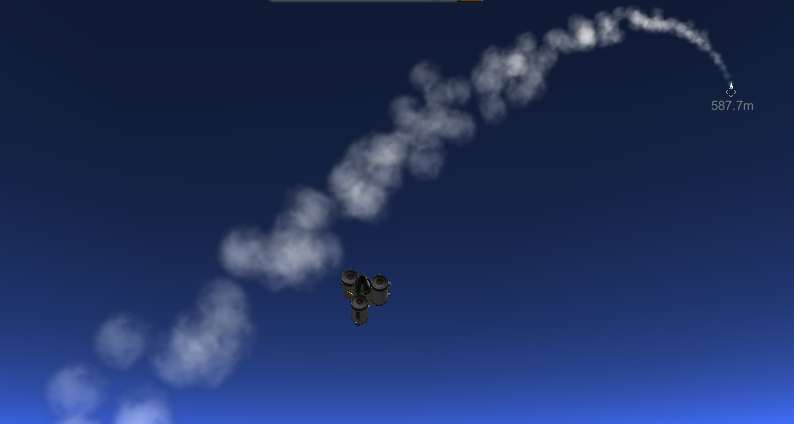 Failure arrives in many forms when you play Kerbal Space Program, surprising you when you least expect it. You can run out of fuel, land too fast, or simply build a rocket that is inherently doomed to rip itself apart. Watching rockets crash into things at high speeds is fun, but it’s heartbreaking to have your flight end in disaster after committing time to the rest of the journey.
Luckily the ship building system is easy to use so you should be able to put together something which is vaguely flyable. Parts clip neatly together, and there are a range of fuel tanks, thrusters, and cockpits from which to choose. The two main types of vehicle are space planes and rockets, but you can also build wheeled vehicles, space stations, and satellites. You build rockets in stages, so that you can jettison fuel containers as they are emptied. Carrying dead weight into orbit is likely to doom your mission, so you’ll need to design your stages carefully.
Kerbal Space Program is still in development, but already there are a variety of scenarios and training missions. The training is useful to give you an understanding of the less self-explanatory parts of the game, such as adjusting orbits. The scenarios put you into difficult situations and let you try and get out of them, and this is good practice for when you get to your own missions.
Eventually the game will contain a mode where you need to create your own space program. The costs of building rockets will presumably be offset by making money from missions, and this should make the game feel more directed. Crashing ships might be fun, but it does grow dull, and the real substance of the game is found in building efficient spacecraft and attempting to reach other planets.
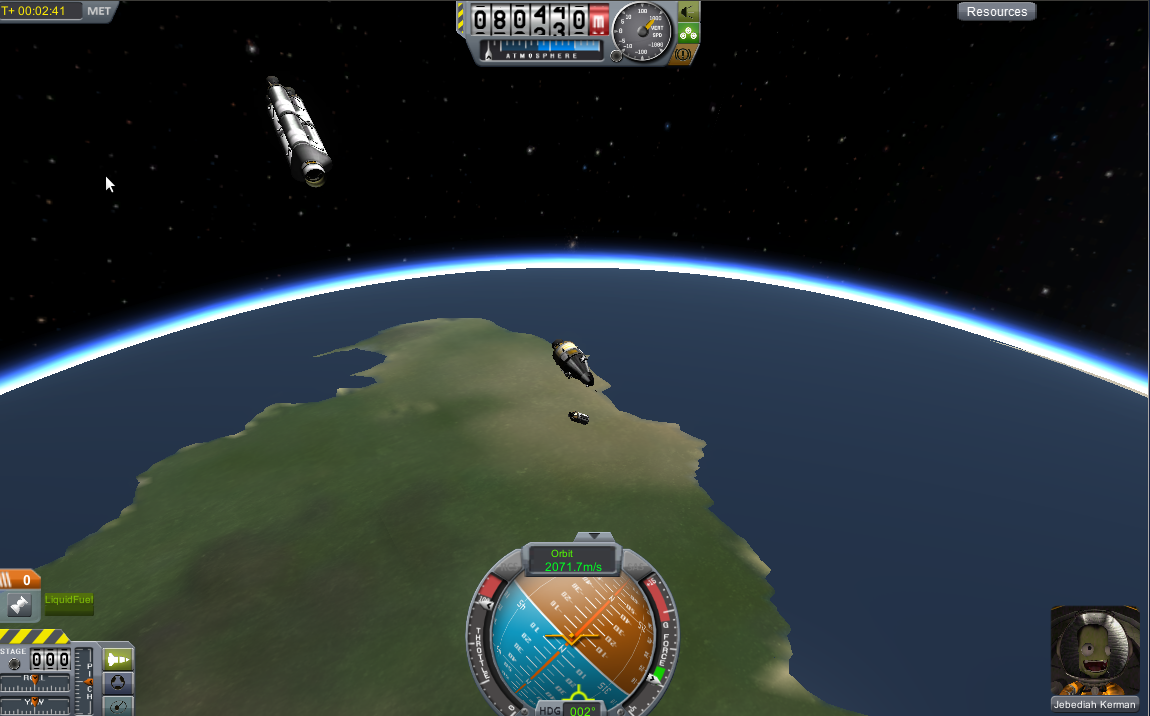
Kerbal Space Program isn’t just for people who are interested in spacecraft. It’s a simulation, but it’s rarely restrictive and dull. You have the freedom to create your own designs, and when they fall apart you can laugh and try again. The game brings a sense of humor to the world of scientific simulation. Kerbal Space Program can be bought right now, and it’s recently been made available on Steam and Linux (I played the gabber on Ubuntu). There’s even a free demo. It’s still in development, but it’s already very playable, and I’d recommend that you give it a try.
Overall Rating: 

A review copy of this game was provided by the developer for that purpose.
© 2013, The Indie Mine. All rights reserved.





Trackbacks/Pingbacks
[...] What’s more fun than flying a rocket? Crashing a rocket! At least, it is for the first few attempts. Kerbal Space Program lets you build and fly space craft around a fictional solar system. It accurately simulates the physics of spaceflight, which makes it difficult but rewarding. Eventually you’ll have to complete missions to earn money for ship building. For now there’s a sandbox mode, which lets you create as many crazy ships as you like. That mode is ideal because you may well be crashing quite a few of them. You can read a full Kerbal Space Program review here. [...]